What’s the Best Fabric for Eczema?
16 February 2024
What’s the Best Fabric for Eczema?
If your little one has eczema, you already know that the wrong outfit can undo a good skin day in minutes.
A jumper that looks cosy probably leaves them scratching, a label behind neck turns into a red raw patch and bedtime becomes a battle. The comforting part is that clothing is one of the few triggers you can actually take charge of.
So which fabrics soothe eczema prone skin, which ones make it worse and does specialist clothing really earn its place?

First, why does fabric matter so much?
Eczema skin has a weaker natural barrier than healthy skin, so it dries out faster and reacts to things the rest of us never notice. Clothing is in contact with your skin all day. That gives it three ways to make things better or worse. Rough fibres rub and set off the itch. Fabrics that trap heat and sweat leave skin warm and damp which is one of the most common reasons a flare kicks off.
And materials that cannot breathe stop skin regulating itself. This is why the National Eczema Society, whose clothing guidance is written and reviewed by dermatologists, steers parents toward soft, breathable, natural fibres, and away from anything that holds in heat.
Can Clothing Really Be Used to Treat Eczema?
The fabrics worth keeping away from sore skin
It is often easier to start with what to take out of the wardrobe. The National Eczema Society notes that wool and synthetics such as polyester and nylon are the materials most often blamed for overheating, sweating and irritation.
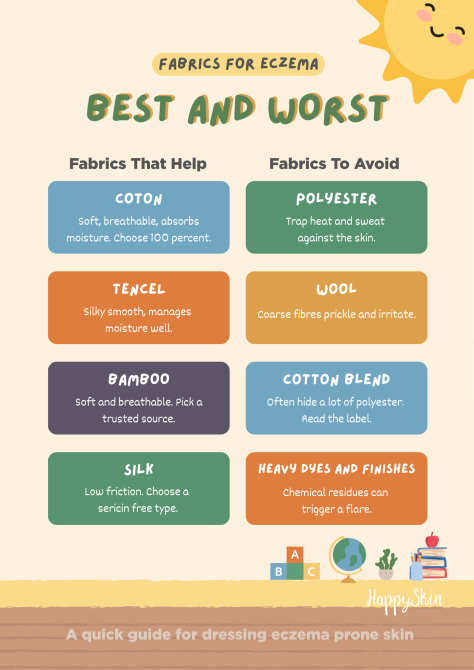
Wool may be natural, but its coarse fibres prickle, so it is better as a coat than a base layer. Then there are the sneaky ones.
A top labelled “cotton rich” can still hide a good chunk of polyester, so it pays to read the composition rather than trust how it feels. Heavy dyes and chemical finishes can irritate too, as can trims like lace, sequins and stiff denim. When skin is already sore, plainer really is kinder.
Which fabrics are kindest to eczema prone skin?
Once the troublemakers are gone, you have some lovely options.
- Cotton is the reliable everyday choice, and for good reason. It is soft, cool, absorbs moisture and lets skin breathe. Go for one hundred percent cotton where you can, ideally tightly woven, since a closer weave feels smoother on the skin.
- TENCEL, also called lyocell, is worth knowing about. It is a silky smooth fibre made from wood pulp, brilliant at managing moisture, and the National Eczema Society rates it as an eczema friendly option that is gentler on the planet than bamboo viscose. Blended with cotton, it gives you softness plus easy washing, which is why it has become a favourite for eczema wear.
- Bamboo is soft, breathable, absorbent and good at regulating temperature, so it suits a lot of children. The one thing to know is that most bamboo clothing is really bamboo viscose, which goes through heavy chemical processing, so pick a source you trust.
- Silk is smooth and low friction, which sensitive skin loves, though it needs gentle washing and can stain if creams rub off on it.
- Linen is light and airy and wicks moisture well. It can feel a little rough, so choose a soft, good quality weave for little ones.
Why a soft cotton top can still make them itch?
Here is the part that catches a lot of parents out.
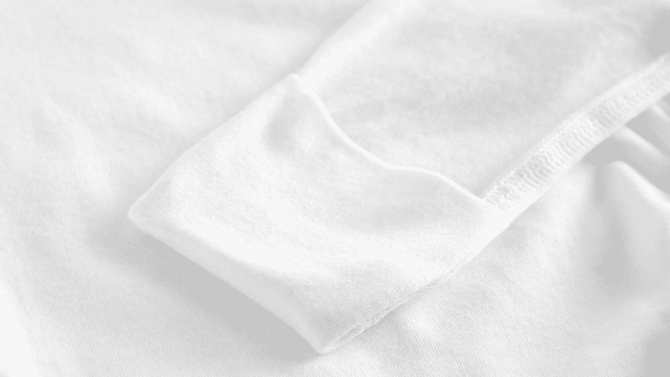
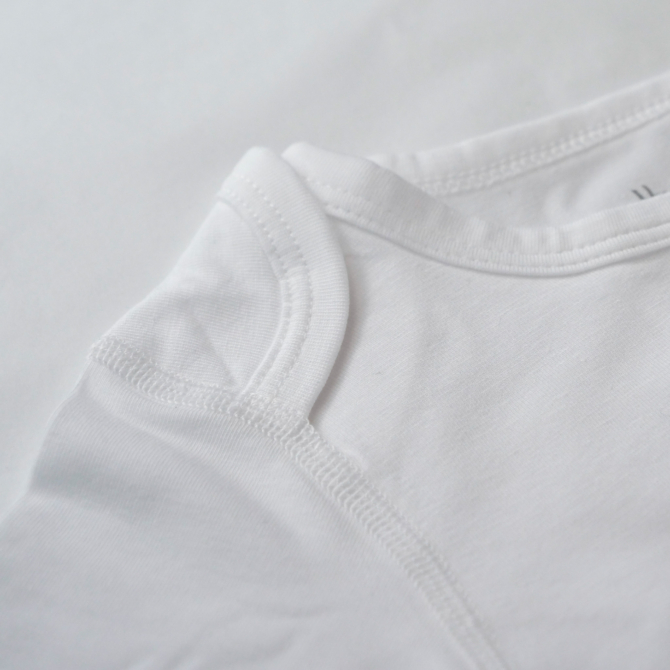
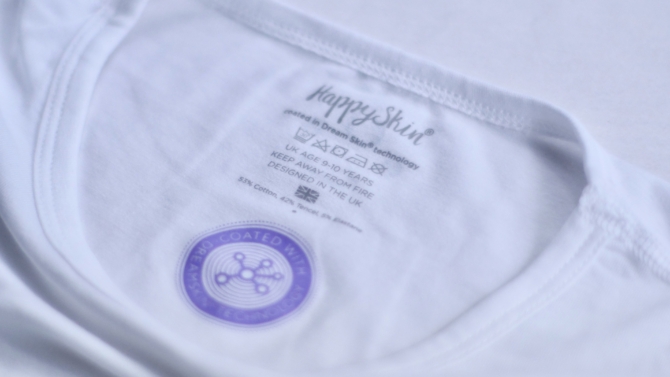
You can buy the perfect fibre and still end up with an unhappy child, because the fabric is only half the story. A 100% cotton top will rub if it has thick seams, a scratchy woven label at the neck, or a stiff zip sitting against the skin.
Before anything else, cut out or choose tag free labels, look for flat seams, and pick a fit that is comfortable rather than tight. It is the cheapest change you can make, and often the one that helps the most.
What’s the Best Fabric for Eczema? – HappySkin, Of Course!
1. Do not forget how you wash it
The right garment can still cause trouble if it comes out of a bad wash. Biological detergents, fabric softeners and strong fragrances leave a residue that sits against the skin and can trigger a flare. A gentle, fragrance free detergent with no softener, rinsed well, keeps all that softness you paid for. We go through the whole routine in our guide to choosing a laundry detergent for eczema.
2. Dressing through the seasons
The best fabric shifts a little with the weather. In summer, light, breathable cotton and TENCEL help head off the sweat and overheating that drive itching. In winter, the trick is layering warmly without putting wool or synthetics next to the skin, so keep the softest breathable layer against the body and build warmth on top, adjusting as you move between the cold outside and a heated room so your child never overheats.
So, can clothing actually treat eczema?
This is the honest bit, and it matters. This has been properly tested. Professor Kim Thomas and the dermatology research team at the University of Nottingham ran a study called the CLOTHES trial, giving 300 children with moderate to severe eczema specialist silk garments alongside their usual care. They found no evidence that the garments improved eczema severity beyond standard care on its own.
In other words, ordinary eczema clothing is not a treatment. What it reliably does, and this is real, is stop making things worse: the right fibre, flat seams, no scratchy label and a breathable fit all cut down the irritation and overheating that keep a flare going.
Our own clothing is built to do that job as well as it can be done, and to go one step further. HappySkin garments are made from supersoft TENCEL and cotton, then coated in DreamSkin, our patented polymer technology, which manages moisture like a cream while letting the skin breathe. Worn next to the skin, it is designed to soothe and protect, and to help break the scratch itch cycle that keeps children awake and sore.
In our own wearer trials the great majority of families saw a clear improvement within a couple of weeks, and our garments are recommended by dermatologists and endorsed by Made for Mums and Mother and Baby.
What parents tell us
The same theme comes up again and again in our reviews, and it is almost always about comfort, not cures.
“Very soft and not scratchy, as my son says.” Altynay, verified review
“Lovely material, no seams or labels to scratch our grandson’s skin.” Kevin, verified review
“My daughter finds it really comfortable and seems to itch less when wearing it.” Salma, verified review
FAQs
What is the single best fabric for eczema?
There is no outright winner, but soft, breathable natural textile are the safest bet. 100% cotton and Tencel blends are the most reliable for everyday wear, with silk and bamboo also well tolerated.
Is bamboo good for eczema?
Yes. Bamboo is soft, breathable and absorbent. It suits many children but lots of bamboo clothing is bamboo viscose, which is chemically processed.
Can clothing help my child's eczema?
The right clothing removes a constant source of irritation, which genuinely helps day to day comfort, even though it is not a cure on its own. Specialist garments like ours are designed to soothe and protect the skin and help break the scratch itch cycle alongside your usual routine.