21 December 2023



8 out of 10 people with atopic eczema have an allergic reaction to a protein in their own sweat.
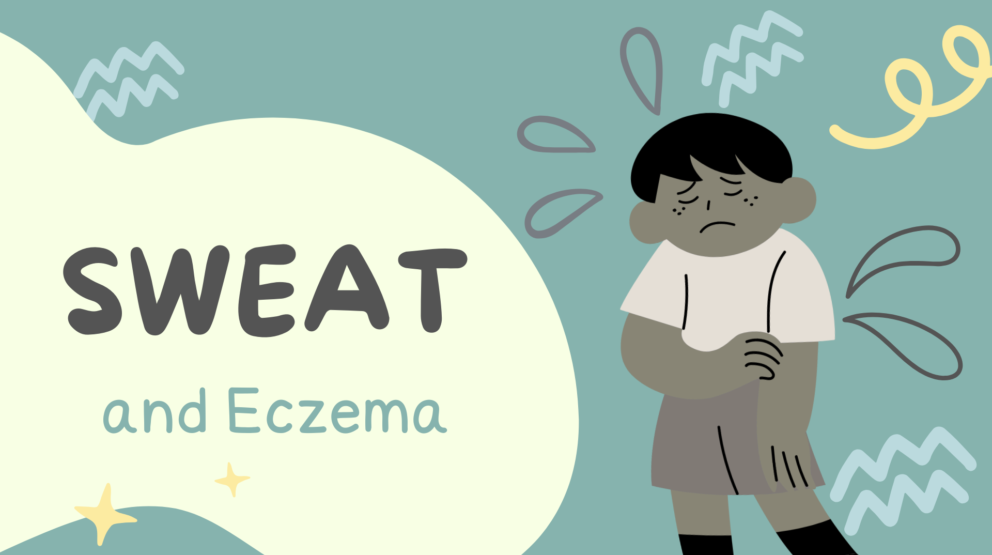
Eight out of ten people with atopic eczema have an allergic reaction to a protein in their own sweat.¹ Not irritation. A real allergy, with histamine, IgE antibodies and the full immune cascade running in the background.
This is not how most parenting advice frames it. The standard line is that sweat irritates eczema, so you wipe it off, wear cotton, keep the bedroom cool. None of that is wrong. It is just missing the layer underneath that explains why these specific things matter, and why your child can still flare on a day when you have done everything right.
Most of the research has been done with adults, but the biology applies across age groups. The mechanism is the same whether the skin belongs to a four-year-old or a forty-year-old.
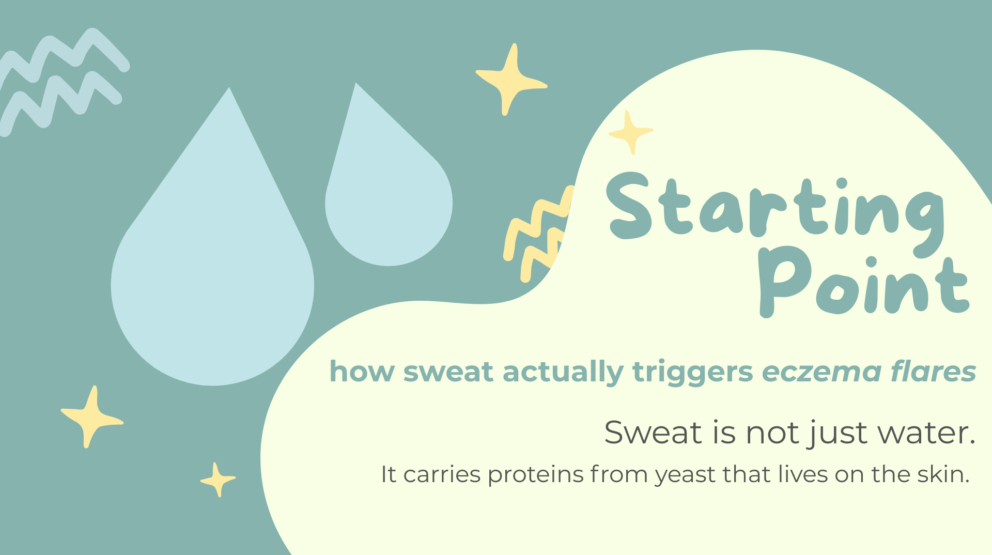
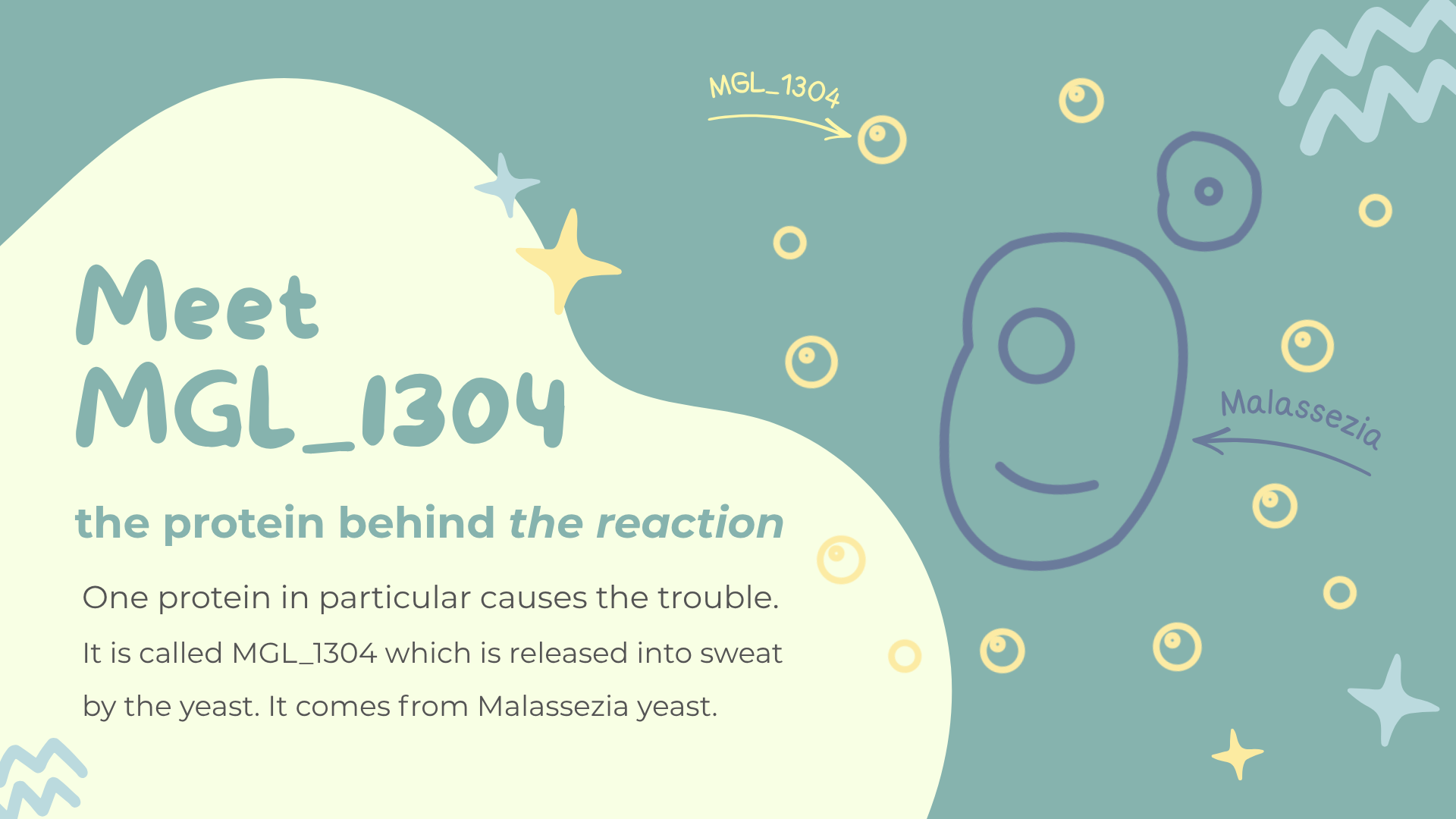
The eight out of ten figure comes from research by Hiragun and his team at Hiroshima University in 2013, who pinned down what was actually happening when sweat hit eczema skin.¹ They named the culprit too: a tiny protein called MGL_1304. The protein comes from yeast. Specifically, Malassezia, which lives on pretty much everyone’s skin without causing any drama for most people.² The yeast itself is harmless and there is no point trying to remove it. But what it produces ends up in sweat, and that is where things get interesting for eczema skin.
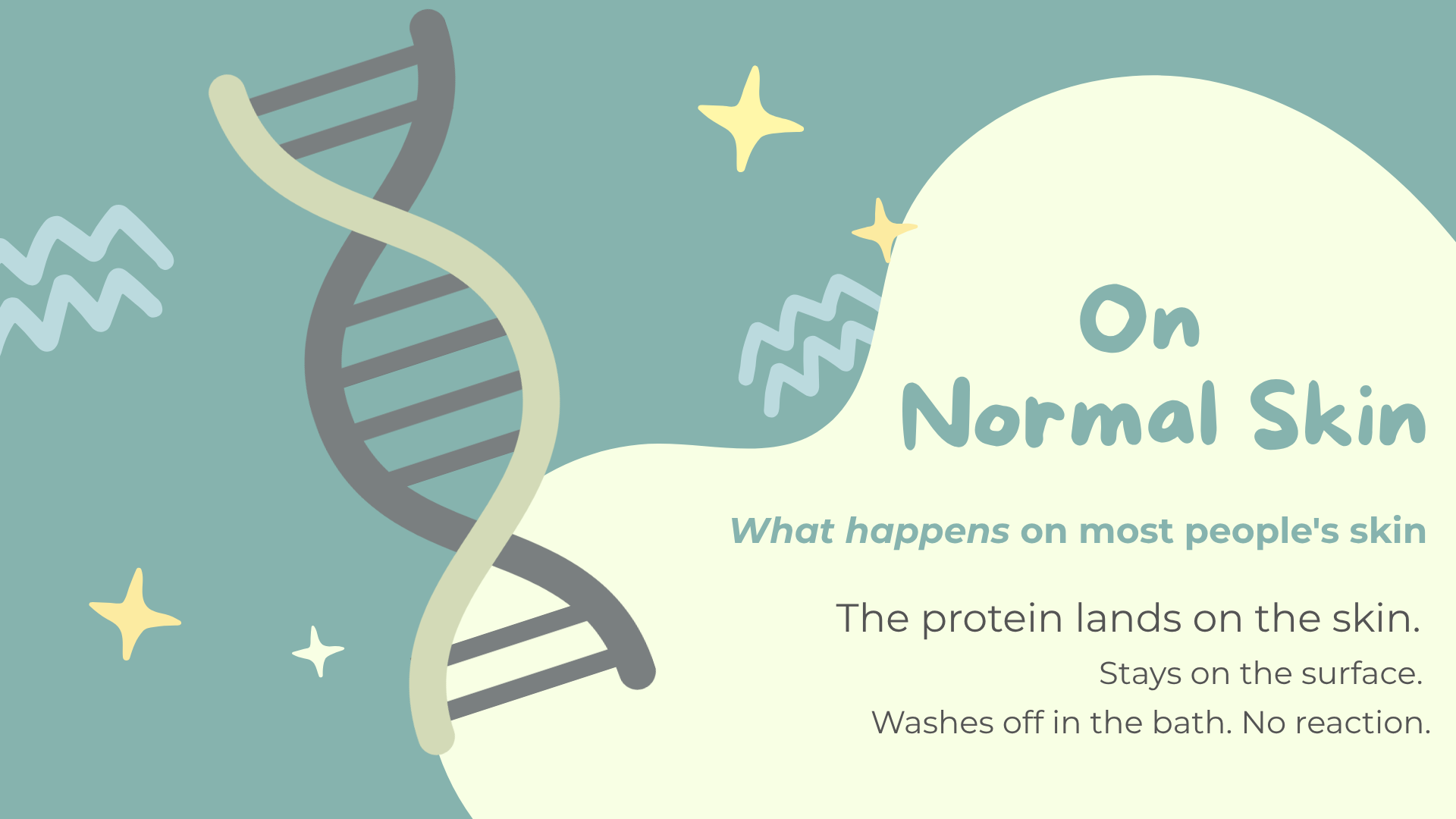
On skin with a healthy barrier, MGL_1304 is just another protein passing through. Sweat carries it out, it sits on the surface, and it washes off in the bath or shower without anyone noticing it was there.
On eczema skin, the same protein behaves very differently. The skin barrier has tiny gaps, usually too small to see but real enough for the protein to slip through. 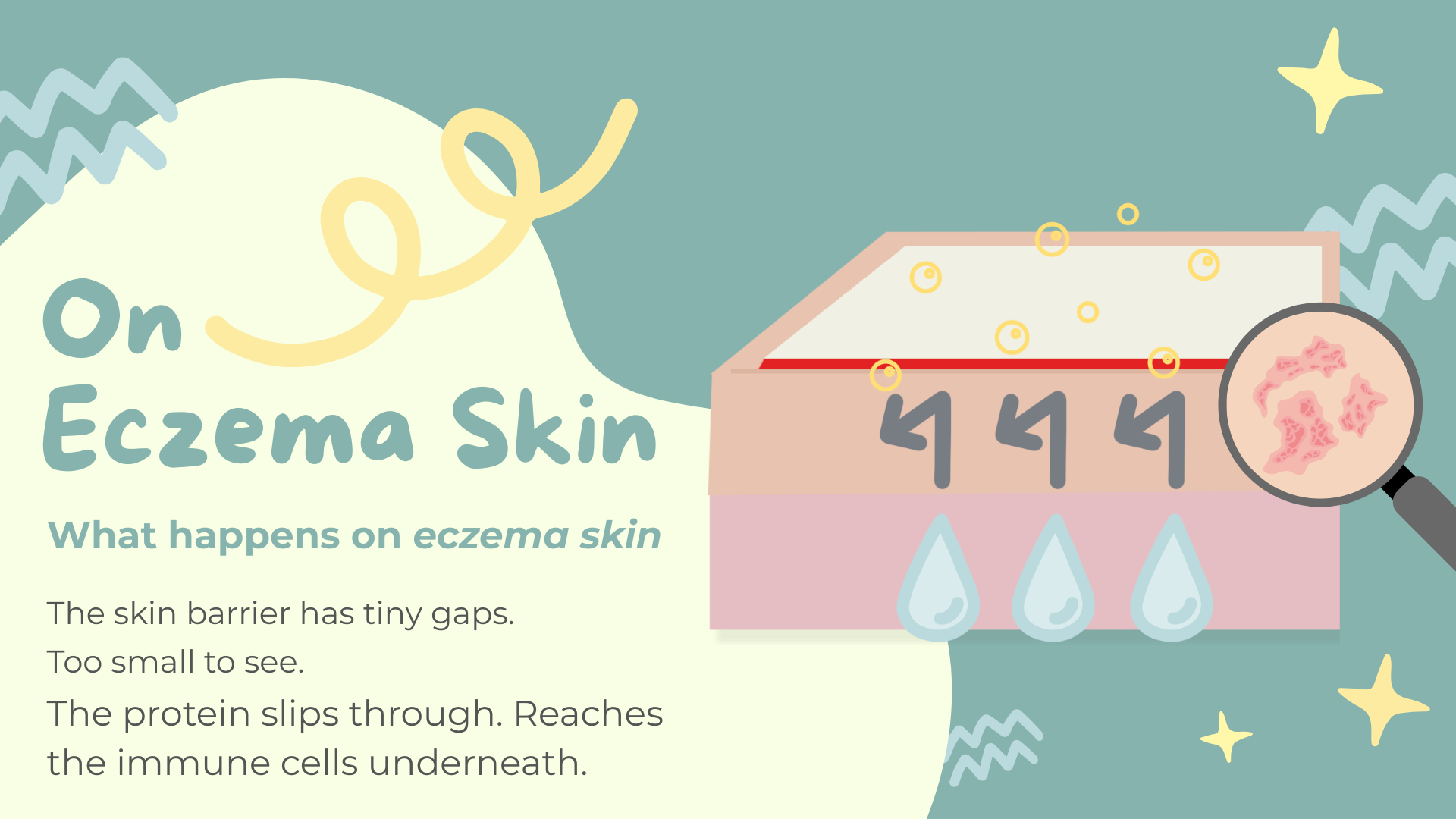
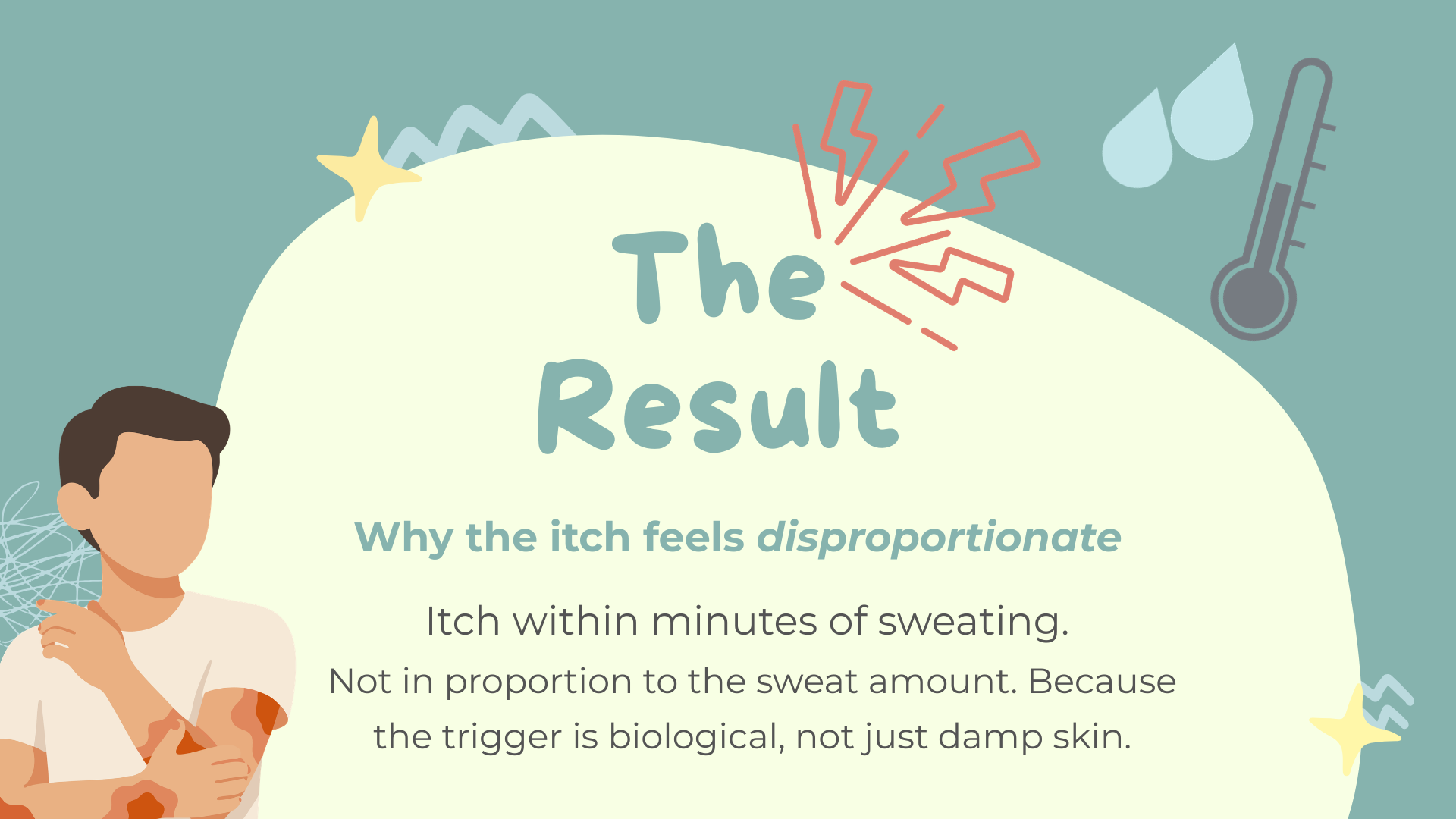
Once it reaches the immune cells underneath, those cells react like they are facing an actual invader. Histamine floods out. The itch starts within minutes.
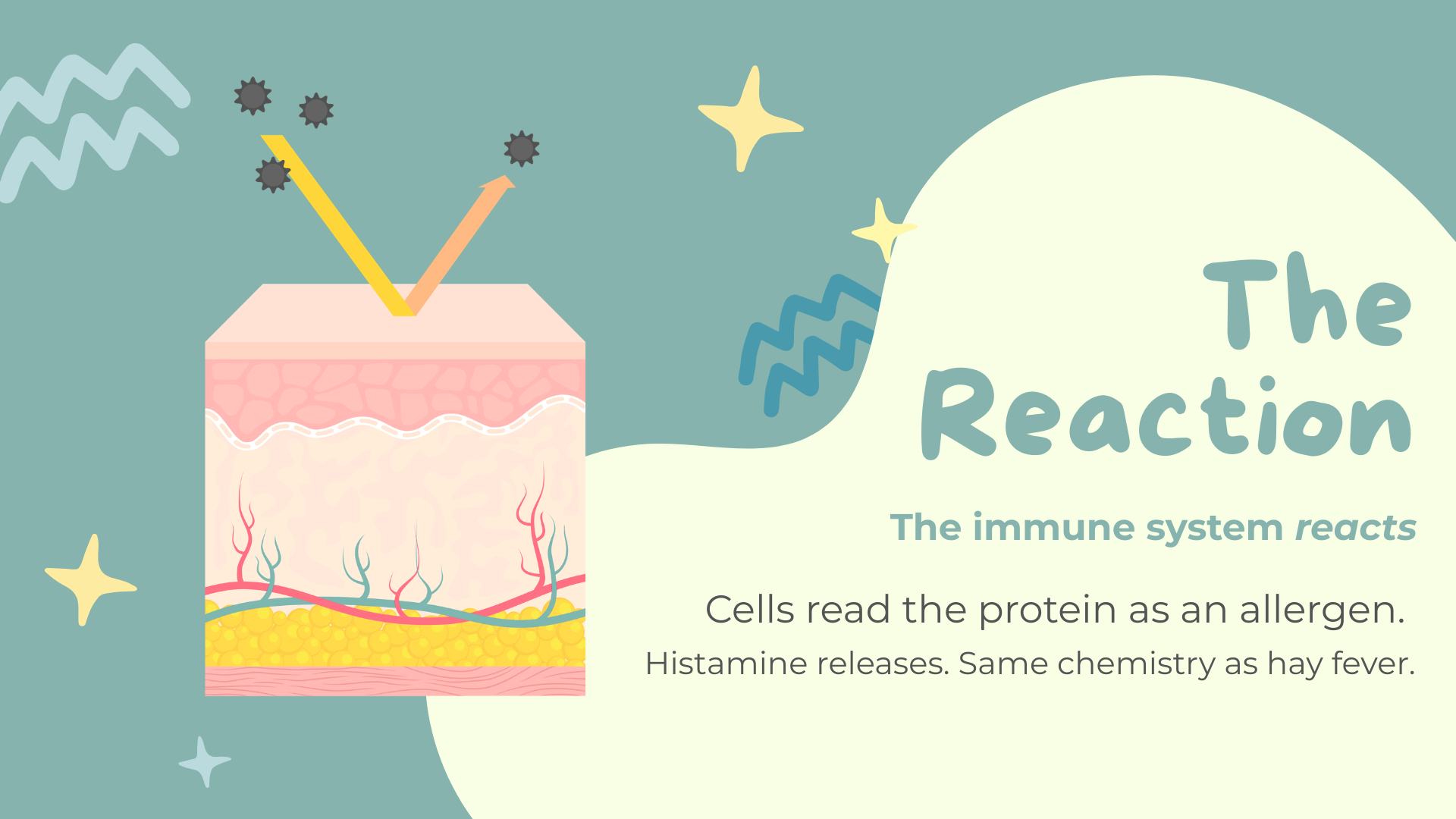
The histamine release that follows is what causes the kind of itch that can have a child clawing at their arms within minutes of running around, and the reason it feels so disproportionate to the amount of sweat involved is that the trigger is biological rather than mechanical, working at the level of immune chemistry rather than just damp skin.
This also explains something parents often notice but rarely have a name for, which is that the standard advice to “just wipe sweat off” does not work as well as it should, because wiping spreads the protein around rather than removing it and adds friction to already inflamed skin in the process.
What actually helps is shortening the contact time between sweat and that broken skin barrier:
Each of those steps is doing the same thing by reducing the window during which MGL_1304 sits against a barrier that lets it through, and the reason consistent moisturiser use sits at the foundation of NICE guidance is that a well-moisturised barrier has fewer of those crossing points to begin with.
Most parents work this pattern out from experience long before they read it anywhere, watching the eczema look calmer through the day, getting a manageable evening, and then waking up to tangled sheets, scratching that has happened in places they cannot reach, and skin that has gone back to where it was a week ago. Night undoes day quite efficiently for children with eczema, and the reason has turned out to be more interesting than the simple explanation of warm bedrooms causing more sweating.
A UK study using overnight sleep monitoring on children aged 6-16 found that children with eczema cool down differently than children without it, and specifically that the skin on their hands and feet stays cooler than expected through the night, which sounds like a small detail but actually disrupts an important biological process.⁵ The way human bodies fall asleep involves a gentle drop in core temperature, achieved by sending warm blood out to the extremities where the heat dissipates into the air, which is why babies often have warm feet at bedtime and why most of us kick a leg out from under the duvet without thinking about it. Cool hands and feet, dropping core temperature, sleep begins.
Sounds like a small detail. It is actually a big one.
Normally, falling asleep works like this. The body lowers its core temperature by sending warm blood out to the hands and feet, where heat dissipates into the air. As the core cools, sleep begins. This is why babies often have warm feet at bedtime, and why most of us kick a leg out from under the duvet without thinking about it.
In children with eczema, this system does not work as smoothly. Inflammation affects the skin and the small blood vessels in it. Heat does not move outward the way it should. The core stays warmer for longer.
Sweat starts up to help bring the temperature down. And now you have the trigger from earlier in this piece, sweat sitting on broken skin, combined with a child whose body is already working harder than it should to fall asleep.
The same study measured that children with eczema spent an average of 88 minutes awake during the night. Much of it in the light, restless sleep where scratching happens almost without waking.
This is why bedroom temperature matters more than it might seem. The Lullaby Trust recommends 16 to 18 degrees Celsius for a child’s bedroom.⁶ For a child whose cooling system already runs against them, the difference between 18 and 21 degrees is not just a comfort question. It is whether the system has any chance of working.

Fabric matters here for the same reason. Fabric that holds heat against the body works against a process that is already struggling. Fabric that supports moisture moving away from skin works with it.
And because pyjamas and bedding stay in contact with the skin for eight hours straight, this is where fabric choice has the most leverage.
Most of the practical advice for managing sweat-triggered eczema is the same advice your health visitor or GP would give. It is also mostly sound. You have probably been doing some version of it for a while:
None of this is new. What is new is having a reason for each piece that goes beyond “because we said so”. The reasoning matters when you are deciding where to focus on a day when you cannot do all of it.
Rinsing shortens the contact time between MGL_1304 and the broken parts of the skin barrier. That is the part of the process you have the most control over.
A quick lukewarm shower works best. A damp cloth across the back of the neck and inner elbows also helps.
Both do more than a dry wipe. They actually remove the protein rather than redistributing it. And they cool the skin enough to slow further sweating in the short term.
Moisturiser within three minutes of washing is the most evidence-based piece of eczema care there is. NICE guideline NG198 puts it at the foundation of management for all children with atopic eczema.⁴
It works because consistent moisturising rebuilds the barrier that lets sweat protein through in the first place. A child who is moisturised reliably has fewer small gaps for the immune system to react through.
That is what makes the daily routine worth protecting even on busy days when it would be easier to skip a step.
The 16 to 18 degrees Celsius range is not a number anyone picked arbitrarily. It is the range where a child with a normal cooling system can fall asleep comfortably.
For a child whose body already runs hot at night, going above that range stacks the problem in a way the morning skin will reflect.
Cotton is genuinely better than wool, polyester or wool-blend for most children with eczema. The National Eczema Society lists it among recommended fabrics for good reason.⁷
The thing cotton does less well is handling moisture in sweat-heavy situations. It absorbs sweat and holds it against the skin rather than moving it away.
In a PE lesson or a restless night, this creates the same problem the rinse is trying to solve. Just over a longer period. And with less opportunity to interrupt it.
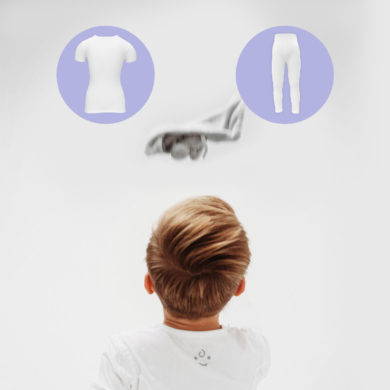
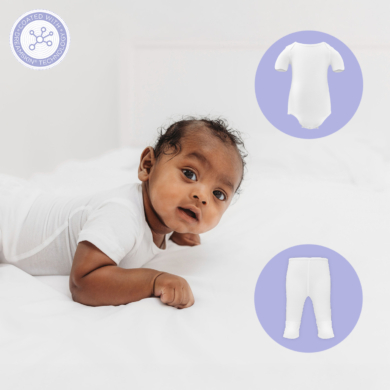
This is part of the reason we built HappySkin garments the way we did. The fabric is Tencel Cotton, coated with the DreamSkin polymer. It forms a moisture-managing layer at the surface of the fibre rather than absorbing sweat into the fabric itself.
None of this means you have been getting eczema care wrong. The advice you already have is mostly good advice. The routine you have built around it is doing real work, even on days when the results do not show it.
What this piece is offering is a reason for that routine. The reason matters most on days when nothing seems to be helping and you start to wonder whether any of it is worth the effort.
On those days, here is what is actually going on underneath:
None of which has anything to do with what you are or are not doing.
The things that genuinely help are the same ones you have been doing. The difference now is you know why each of them is doing what it does. Which makes them easier to keep doing on the days when it would be easier not to.
If you want to see how HappySkin clothing is designed to work alongside this routine, our How It Works page goes into the science behind the fabric in more detail.
References
¹ Hiragun T, Ishii K, Hiragun M et al. Fungal protein MGL_1304 in sweat is an allergen for atopic dermatitis patients. Journal of Allergy and Clinical Immunology, 2013.
² Murota H, Yamaga K, Ono E, Katayama I. Sweat in the pathogenesis of atopic dermatitis. Allergology International, 2018.
³ National Eczema Society. Heat, sweat and exercise as eczema triggers. Updated 2024.
⁴ National Institute for Health and Care Excellence (NICE). Atopic eczema in under 12s: diagnosis and management. NG198 (updated 2025).
⁵ Chang YS, Chou YT, Lee JH et al. Thermoregulation, scratch, itch and sleep deficits in children with eczema. Sleep Medicine, 2016.
⁶ The Lullaby Trust. Room temperature and safer sleep. Updated 2024.
⁷ National Eczema Society. Clothing and eczema. Updated 2024.
To get the newest eczema news, helpful tips, and special discounts first, please join our mailing list.
Simply enter your email below!