


16 July 2024



Many parents notice a rash on their baby’s neck during everyday moments like feeding, sleeping, or getting dressed. Because the neck is a small area that bends, rubs, and traps moisture easily, even mild irritation can look worrying at first. This guide explains why neck rashes are so common in babies and children, how to tell when eczema might be involved, and when it’s worth seeking advice.
A rash on a baby’s neck is something many parents notice during everyday moments like feeding, sleeping, or getting dressed. Because the neck bends constantly and tends to trap warmth and moisture, even mild irritation can look worrying at first.
Eczema can affect the neck, but it usually behaves differently from short-term irritation. Rashes linked to eczema tend to be drier, itchier, and more likely to keep coming back. Understanding this difference can help parents decide what gentle care is needed and when to seek advice.
Eczema is a common long-term skin condition that often begins in early childhood. Many children develop symptoms within the first few years of life, although the severity and pattern can vary widely from child to child.
Research into childhood eczema shows that symptoms do not always appear evenly. In babies and young children, the face and neck are frequently affected, partly because these areas are exposed to moisture, movement and friction throughout the day. Seeing changes around the neck does not automatically mean eczema is severe, but it is a recognised area of involvement.
Why Is My Baby Skin Always Dry and Red? It Could Be a Damaged Skin Barrier
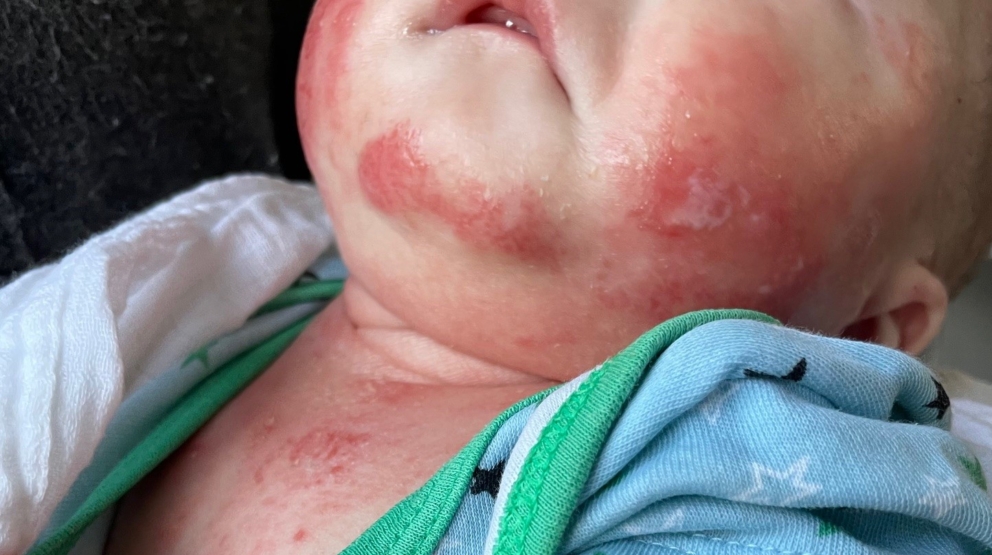
A baby’s neck creates a very specific skin environment. It moves constantly, natural folds, and is often covered by clothing, bibs, or blankets. This makes it easy for moisture and heat to build up.
Paediatric skin research explains that irritation is more likely in areas where moisture and friction happen together. For babies, this commonly comes from drooling, milk residue, bibs or collars rubbing the same area repeatedly, and heat building up during sleep.
Because a baby’s skin barrier is still developing, it can react quickly, which is why a neck rash may appear suddenly and look more noticeable than rashes elsewhere.
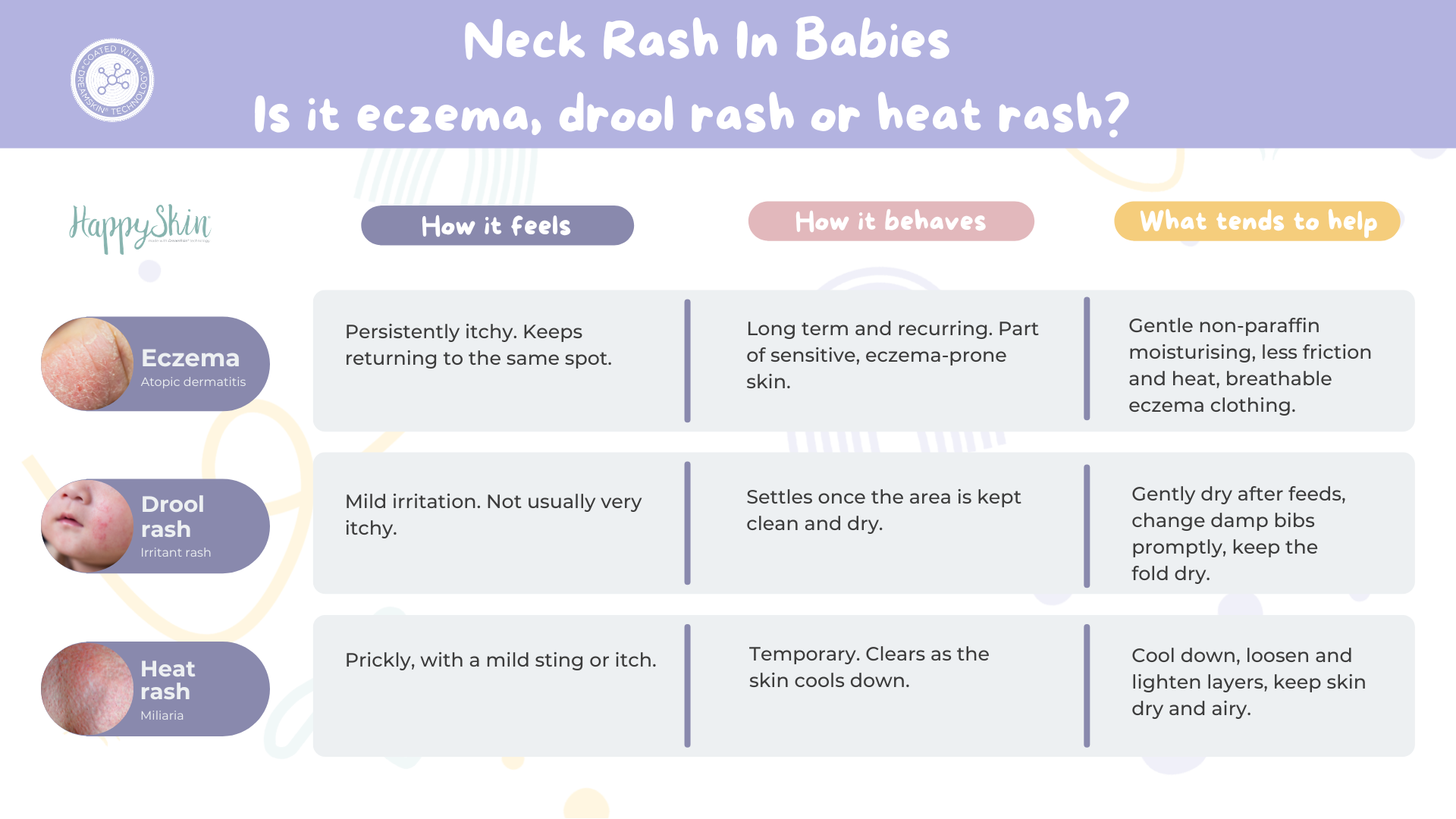
Parents often wonder whether a rash on the neck is simply irritation or something more persistent like eczema. While only a healthcare professional can make a diagnosis, eczema tends to show certain patterns over time.
A neck rash may be linked to eczema if the skin feels persistently dry, rough, or scaly, the area appears itchy or uncomfortable (particularly at night), the rash keeps returning to the same spot, or there are signs of eczema or very sensitive skin elsewhere on the body.
One difference many parents notice is how the rash behaves day to day. Irritation caused mainly by moisture or rubbing often settles once the area is kept clean and dry. Eczema, on the other hand, tends to come and go, sometimes flaring again even when there is no obvious trigger.
For some children, itching around the neck is most noticeable at night, when warmth and movement make sensitive skin harder to settle.
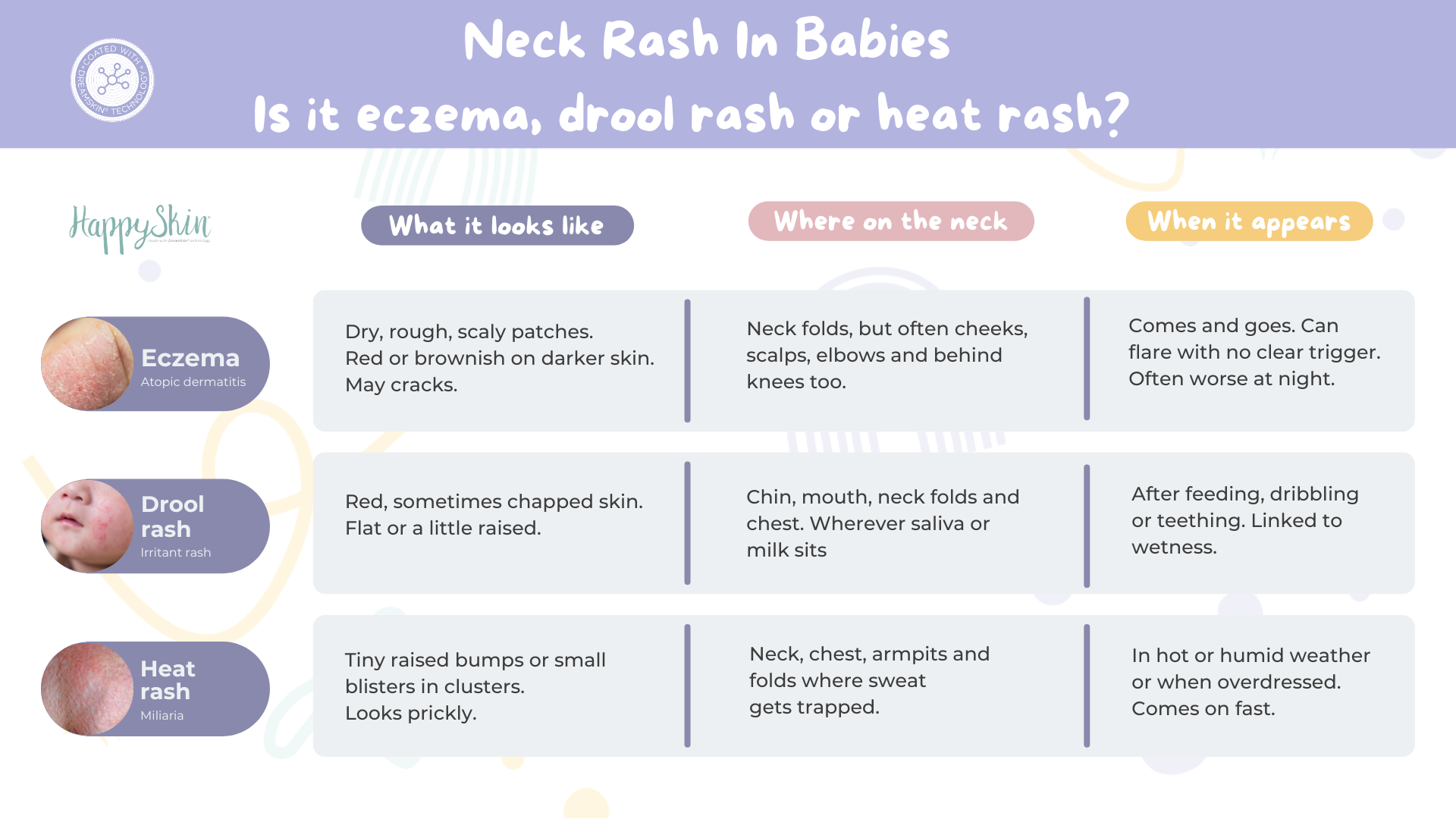
It is common for parents to feel that a rash on their baby’s neck looks redder or more uncomfortable in the evening. This does not necessarily mean the skin is getting worse.
At night, body temperature naturally rises, clothing stays in contact with the skin for longer, and moisture is more likely to collect in the folds of the neck. For babies with sensitive or eczema-prone skin, this is often when redness and discomfort become more noticeable.
This pattern is similar to what many parents notice with eczema in general, where skin flare-ups can feel more noticeable or really itchy/ angry red during the night.
Yes. Most neck rashes in babies are caused by everyday irritation rather than eczema. These rashes often appear after feeding, drooling, or sweating and improve when the area is gently cleaned and dried.
Some babies also react to laundry detergents, fabric finishes, or fragranced products. Because the skin on the neck is thinner and more sensitive, reactions often show up there first.
The neck is constantly bending, stretching, and rubbing against clothing and bedding. It also traps warmth more easily than flatter areas of skin.
Areas exposed to repeated friction and heat often take longer to calm down. This can make neck rashes feel stubborn, even when parents are taking gentle and consistent care.
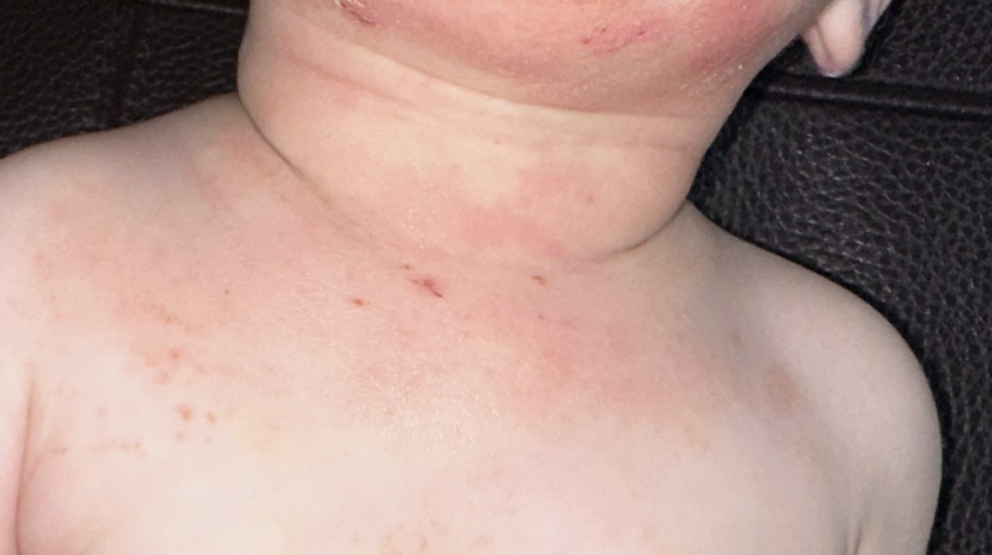
Neck rashes can be frustrating because they often take longer to settle than rashes elsewhere. This does not mean the skin is not healing.
Throughout the day, the neck is repeatedly exposed to moisture and movement, which gives the skin fewer chances to fully recover. Even small amounts of friction can interrupt the healing process, making progress feel slower than expected.
General eczema advice does not always account for how different the neck is from other areas of skin.
Parents often see the biggest improvement when they focus on reducing ongoing irritation. This includes gently drying the neck after feeds or baths, changing damp bibs promptly, avoiding tight collars or stiff seams, and keeping layers light to reduce overheating.
Unlike flatter areas of skin, the neck is exposed to constant movement. Even frequent wiping can sometimes add to irritation if the skin is rubbed too firmly or too often. Small adjustments around moisture, fabric contact such as an eczema neck wrap, and temperature often make a noticeable difference.
Yes. While neck rashes are especially common in babies, similar irritation can affect toddlers and young children.
As children grow, collars, school clothing, and active play can continue to cause rubbing and heat around the neck. Managing warmth and friction in this area remains important beyond the baby stage.
Complete Eczema Guide for Parents Topical Steroid Withdrawal (TSW): What It Is, Why It Happens and Recovery Top-Tips

You may want to seek advice if the rash does not improve or keeps returning, the skin becomes cracked or weepy, your child seems very itchy or distressed, or you are unsure whether eczema could be involved.
Is a rash on my baby’s neck always eczema?
No. Most neck rashes in babies are caused by moisture, friction, or everyday irritation.
Eczema can affect the neck, and studies on childhood eczema consistently describe the face and neck as commonly affected areas in babies and young children.
Yes. Heat and sweating can weaken the skin barrier, especially in areas like the neck.
If the rash is persistent, very uncomfortable, or affecting sleep, it is best to seek medical advice.
Editorial note on evidence
This article is informed by paediatric epidemiology studies, clinical guidance from specialist paediatric hospitals, and peer-reviewed dermatology reviews on head and neck involvement in eczema.
To get the newest eczema news, helpful tips, and special discounts first, please join our mailing list.
Simply enter your email below!