


Autumn should bring crisp air, warm jumpers, and cosy moments rather than itching skin allergies that rob your child (and you) of sleep. For families managing atopic dermatitis, the seasonal shift triggers allergic eczema flares as allergen exposure spikes and skin barrier function weakens in response to environmental changes.
If your philosophy avoids emollients, oils, ointments, paraffin products, and steroids (like ours at HappySkin), you’re not helpless against itching skin allergy symptoms. You can leverage smart environmental trigger management, cooling techniques, and behavioural strategies to calm skin inflammation and reduce allergic flare-ups.
Our Philosophy: Why HappySkin Takes a Different Approach
We’ve worked with hundreds of families who’ve found that conventional emollient-based routines didn’t provide the relief they hoped for—or in some cases, seemed to worsen allergic eczema symptoms over time. We understand this approach differs from standard NHS guidance, and we respect that traditional treatments work well for many families.
However, we also believe there’s room for alternatives, particularly for:
- Children who develop reactions to common emollient ingredients
- Families concerned about long-term petroleum product use
- Parents seeking to support their child’s natural skin barrier function rather than creating dependency on topical products
- Those managing itching skin allergy triggers through environmental and lifestyle modifications
Our method focuses on environmental trigger reduction, thermal therapy, protective barriers via fabric, and behavioural strategies. It’s not ideological rigidity – it’s a practical framework that prioritizes your child’s comfort and your peace of mind. We remain open to medical escalation when necessary, because no philosophy is worth a child’s suffering.
Understanding Autumn Itching Skin Allergies and Eczema
Autumn’s arrival often triggers itching skin allergies in children prone to atopic dermatitis (eczema). But what’s actually happening beneath the skin?
When allergen exposure increases whether from dust mites thriving in heated homes, lingering pollen, or indoor moulds where sensitised skin launches an immune system reaction. This inflammatory response triggers histamine release, causing the intense itching sensation that defines allergic eczema.
Unlike simple dry skin, itchy skin allergy symptoms involve:
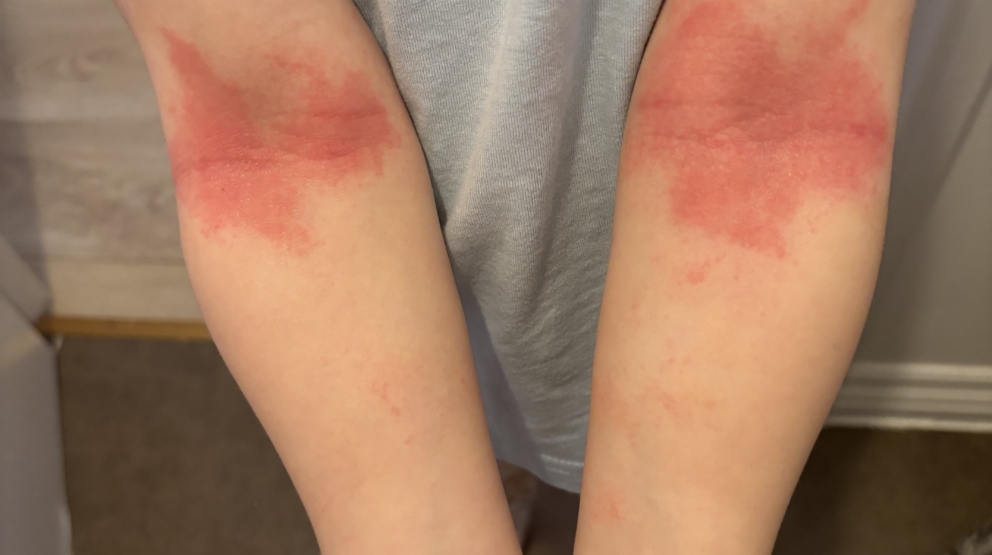
- Raised, red patches (signs of skin inflammation)
- Intense itching that worsens at night when histamine response peaks
- Flare-ups triggered by specific environmental triggers
- Compromised skin barrier function that allows deeper allergen penetration
- The classic “itch-scratch cycle” where scratching damages skin, worsening inflammation
For children experiencing allergic flare-ups alongside eczema, managing contact dermatitis and dermatitis symptoms requires a multi-pronged approach focused on reducing allergen exposure while supporting the skin’s natural defenses.
The Science Behind Autumn’s Itching Skin Allergy Surge
When children with atopic dermatitis encounter allergens, their immune system reaction goes into overdrive. Mast cells which is specialized immune cells in the skin—release histamine, the chemical responsible for that unbearable itching sensation. This histamine response causes blood vessels to dilate, leading to visible skin inflammation: redness, swelling, and heat.
In autumn, compromised skin barrier function (from dry air and temperature fluctuations) allows more allergen penetration, creating a vicious cycle where allergic eczema worsens, further damaging the barrier, inviting more allergen exposure. The inflammatory response becomes chronic, and the skin loses its ability to protect itself effectively.
Why Autumn Chills Often Come with Itch: Seasonal Triggers Explained
As the season turns, multiple environmental triggers converge to create perfect conditions for itching skin allergy flares:
Atmospheric Changes
- The air becomes cooler and drier; central heating dries it further, directly impacting skin barrier function
- The skin loses moisture passively through transepidermal water loss (TEWL)
- Rapid temperature fluctuations between heated homes and cold outdoor air stress sensitized skin
Indoor Allergen Exposure
- Children spend more time indoors, increasing exposure to dust mites, mould spores, and pet dander
- Heating systems that have been dormant all summer circulate accumulated allergens
- Closed windows trap allergens, creating concentrated allergen exposure
- Dust mites thrive in the 40-60% humidity range that feels comfortable to humans
Lingering Outdoor Allergens
- Late-season pollen (ragweed, nettles, dock) deposits on exposed skin
- Children playing in fallen leaves encounter mould spores
- Dampness from autumn rain creates ideal conditions for outdoor mould growth
Mechanical and Physical Irritants
- Friction from heavier clothing (wool jumpers, thick tights)
- Static electricity from synthetic fabrics
- Increased sweating under layers, then rapid cooling
- Tight clothing that restricts airflow and traps heat
Together, these environmental triggers activate an inflammatory response that pushes skin over its threshold. Children with allergic eczema are particularly vulnerable, as their immune system reaction to seasonal allergens compounds the mechanical irritation from clothing and heating. This combination creates the perfect storm for itching skin allergy flare-ups and persistent dermatitis symptoms.
Identifying Your Child’s Itching Skin Allergy Triggers
Not all itch is created equal. Understanding whether your child’s discomfort stems from atopic dermatitis, contact dermatitis, or a direct allergic reaction skin response helps you target your approach effectively.
Atopic Dermatitis vs. Contact Dermatitis: What’s the Difference?
Atopic Dermatitis (Allergic Eczema):
- Chronic condition involving immune system reaction to various triggers
- Typically appears in skin creases (inner elbows, behind knees, neck)
- Tends to run in families with history of allergies, asthma, or hay fever
- Involves systemic histamine response and chronic skin inflammation
- Flares and remits in patterns, often seasonally
- Creates sensitized skin that reacts to multiple triggers
Contact Dermatitis:
- Acute reaction when skin touches specific irritants or allergens directly
- Localized to exact contact area (e.g., where fabric touches, where soap was applied)
- Can be irritant (direct chemical damage) or allergic (delayed immune response)
- Usually improves rapidly once trigger is removed
- May present as distinct borders matching the irritant’s contact pattern
Many children with atopic eczema also develop contact dermatitis, creating layered itching skin allergy symptoms that require comprehensive management.
Common Autumn Allergen Exposure in the UK
Dust Mite Allergy UK Context:
- Peaks when heating systems activate in October/November, circulating dormant allergens
- British homes’ tendency toward dampness creates ideal dust mite conditions
- Bedding, carpets, and soft furnishings harbor the highest concentrations
- Unlike outdoor allergens, dust mites cause year-round issues that worsen in autumn
Mould Spores:
- Thrive in damp autumn conditions and poorly ventilated British homes
- Appear in bathrooms, kitchens, window frames, and poorly insulated walls
- Can trigger severe allergic reaction skin symptoms in sensitized children
- Often overlooked as an environmental trigger until visible growth appears
Late-Season Pollen:
- Though less prevalent than spring/summer pollen, ragweed and weed pollen affect sensitized skin
- UK-specific: nettle, dock, and mugwort pollen peak September-October
- Can deposit on exposed skin during outdoor play
- Differs from US autumn allergy patterns (ragweed less common in UK)
Animal Dander:
- More problematic when pets spend more time indoors during colder months
- Cat and dog dander becomes airborne, settling on soft furnishings
- Direct contact with pets can cause immediate allergic flare-ups
- Even homes without pets may have dander brought in on clothing
The Trigger Diary: Your Essential Tool
Keep a detailed diary noting when itching skin allergy symptoms worsen. Track:
- Date, time, and severity of itch (scale 1-10)
- Weather conditions (temperature, humidity, rain)
- Indoor heating use and room temperature
- Time spent outdoors and activities
- Clothing worn (fabrics, tightness, layers)
- Foods eaten (potential dietary triggers)
- Sleep quality and night-time scratching episodes
- Stress levels and emotional state
- Any new products, detergents, or household changes
After 2-3 weeks, patterns typically emerge. This helps distinguish between general skin inflammation and specific allergic flare-ups requiring targeted intervention.
3 Non-Product Top-tips to Help Your Child’s Allergic Reaction in Detail
1. Adaptive Clothing & Barrier via Fabric
What your child wears profoundly impacts itching skin allergy severity.
Fabric Guidelines:
- First choice: Hypoallergenic material, loosely woven, soft finish
- Second choice: Organic fabric (naturally hypoallergenic, breathable)
- Avoid completely:
- Wool (despite being natural, causes mechanical irritation)
- Synthetics (polyester, nylon trap heat and create static)
- Rough textures (corduroy, heavy denim)
- Tight-fitting garments
- Night-time Coverage Strategy: Long-sleeved, long-legged eczema pajamas keep skin from being exposed to friction, allergens, or temperature fluctuations that worsen sensitized skin responses. Many families report that full coverage alone reduces scratching by 30-40%.
- Tag and Seam Management: Remove all clothing labels and tags. Turn garments inside-out if seams cause irritation. Even small irritations compound itching skin allergy symptoms in hypersensitive children.
2. Humidity, Temperature & Allergen Control
Environmental management targets the root environmental triggers of allergic eczema.
Humidity Management:
- Target: 40-50% relative humidity (measure with hygrometer)
- Tool: Cool-mist humidifier (not warm-mist, which can encourage mould)
- Maintenance: Clean humidifier every 2-3 days to prevent bacterial growth
- Warning signs: Condensation on windows means humidity too high (mould risk)
Temperature Regulation:
- Bedroom: 16-18°C at night (cooler than NHS safe sleeping guidelines for infants, appropriate for older children with atopic dermatitis)
- Daytime living areas: 18-20°C maximum when heating is on
- Avoid: Rapid temperature changes (going from cold outdoors to overheated car)
- Why it matters: Heat triggers histamine release and increases itch perception
Allergen Reduction Protocol:
- Bedding: Wash weekly in 60°C water (kills dust mites)
- Mattress/pillow covers: Hypoallergenic, dust-mite proof encasements
- Flooring: Remove carpets if possible (harbor dust mites, difficult to clean)
- Curtains: Replace heavy drapes with washable blinds or light cotton curtains
- Soft toys: Freeze overnight monthly (kills dust mites), then wash
- Pets: Keep out of child’s bedroom completely, bathe pets weekly
- Cleaning: HEPA-filter vacuum twice weekly, damp-dust (never dry dust)
Ventilation Strategy:
- Open windows for 10-15 minutes daily (even in cold weather)
- Cross-ventilation: open windows on opposite sides of home
- Avoid during high pollen count days if child has pollen allergy
- Use extractor fans in bathroom/kitchen to reduce moisture
- Inspect for mould regularly (window frames, corners, under sinks)
Air Quality:
- No smoking anywhere near child (thirdhand smoke on clothing triggers flares)
- Avoid scented candles, air fresheners, incense
- Consider air purifier with HEPA filter for bedroom (reduces airborne allergen exposure)
- Change HVAC filters monthly during heating season
3. Distraction & “Anti-Scratch” Behavioral Techniques
The psychological component of itching skin allergy is significant. The itch-scratch cycle is partly neurological habit.
Training Alternative Responses:
- Pat instead of scratch: Teach child to pat or press itchy areas
- Cool pressure: Apply cold compress when itch urges arise
- Gentle pinch: Very light pinching near (not on) itchy area can confuse nerve signals
- Ice pack grab: Keep small ice pack in cloth pouch; child holds it when desperate
Distraction Techniques During Peak Itch:
- Storytelling or audiobooks: Engages mind away from skin inflammation sensations
- Deep breathing: 4-7-8 breathing pattern (inhale 4 counts, hold 7, exhale 8)
- Progressive muscle relaxation: Systematically tense and relax muscle groups
- Quiet music or white noise: Reduces hyperfocus on itch
- Hand fidgets: Squeeze balls, fidget toys keep hands busy
Reward Systems (for older children):
- Track scratch-free nights on calendar
- Small rewards for consecutive scratch-free periods
- Never punish scratching (it’s involuntary during sleep)
- Frame as “helping skin heal” rather than “being good”
Nail Management:
- Keep nails very short, filed smooth
- Cotton gloves at night reduce damage from unconscious scratching
- Discourage nail-biting (ragged nails cause more skin trauma)
Cognitive Approaches for School-Age Children:
- Explain the itch-scratch cycle in age-appropriate terms
- Help child identify itch triggers (tight clothing, warm rooms)
- Empower child to advocate for needs (asking teacher to open window, remove jumper)
- Normalize condition (many children have atopic dermatitis)
Pre-Sleep Routines That Reduce Itch Perception:
- Consistent bedtime (irregular sleep worsens inflammatory response)
- Screen-free hour before bed (blue light increases alertness)
- Calming activities only (no roughhousing, exciting stories)
- Cool bedroom environment established 30 minutes before bedtime

For mild to mild-moderate allergic flare-ups, many families at HappySkin report meaningful relief through environmental management and clothing strategies alone. The success rate depends on:
- Severity of atopic dermatitis
- Identifying and removing key environmental triggers
- Consistency in applying all strategies simultaneously
- Individual variation in skin barrier function
For moderate-to-severe allergic eczema, these strategies typically reduce intensity and frequency of flares but may not completely eliminate itching skin allergy symptoms. They work best as part of comprehensive management, potentially reducing need for intensive medical treatments.
They often overlap but aren’t identical. Atopic eczema (the most common childhood type) is fundamentally an allergic condition involving an overactive immune system reaction. When children with eczema encounter triggers, they experience allergic eczema flares—essentially an allergic reaction affecting already vulnerable, sensitized skin.
However, not all eczema has a strong allergy component (some is purely irritant-driven), and not all allergic reaction skin issues present as traditional eczema patterns.
Absolutely. The psychoneuroimmunology connection between stress and skin inflammation is well-established in dermatology research:
- Stress triggers cortisol release, which can worsen inflammatory response
- Anxiety increases itch perception and scratching behavior
- Poor sleep (from stress or itch) worsens immune system reaction
- The itch-stress-itch cycle becomes self-perpetuating
Happy Stories: Our Real Happy Families Managing Autumn Itching Skin Allergies
Names changed for privacy
Emma, Age 4 – London
“We’d tried every cream recommended by our GP, but Emma’s allergic eczema only worsened. Autumn was torture, she’d wake 5-6 times nightly scratching until bleeding. When we found HappySkin’s sleepsuit, we were skeptical but desperate.
We focused on three things: cooling her bedroom to 17°C (seemed crazy, but worked!), weekly bedding washes at 60°C, and consistent with sleepsuit from HappySkin before bed. Within 10 days, she was waking only 1-2 times. After a month, maybe 2-3 times weekly. Not perfect, but life-changing for our family.
The trigger diary also revealed her worst flares followed visits to her grandmother’s house, turned out the cat dander was a major trigger we’d never identified.”
Jacob, Age 7 – Cardiff
“Jacob’s eczema was moderate, not severe enough for intensive hospital treatment, but enough to impact his sleep, schoolwork, and confidence. The constant cycle of creams felt endless, and we weren’t seeing improvement.
We found out DreamSkin technology was our breakthrough via a short-video on Tiktok. HappySkin gloves at night (we had to experiment with styles before finding ones he’d wear) reduced the damage from scratching by probably 80%. Combined with keeping our home cooler and using a dehumidifier in his damp bedroom, his skin inflammation reduced noticeably.
We still have flares during high pollen days or when he eats too much dairy (we didn’t fully eliminate it, just reduced). But the itching skin allergy symptoms are manageable now without constant product application.”




The Long Game of Itching Skin Allergy Management
This approach is about gentle resistance – not prescribing miracle cures, but giving devoted parents tools they can use night after night when everything else feels too heavy, too greasy, or simply ineffective.
Managing itching skin allergies and atopic dermatitis through environmental and behavioral strategies is slow, iterative, and often imperfect. There will be nights your child wakes scratching. You’ll feel the frustration, the exhaustion, the worry that you’re not doing enough.
But every night you improve the environment—reduce allergen exposure, cool the room, eliminate environmental triggers, give the skin breathing space through fabric barriers – you chip away at the “itch threshold.” You’re supporting your child’s skin barrier function in returning to baseline. You’re teaching them coping mechanisms they’ll carry into adulthood.
Remember:
- Consistency matters more than perfection
- Small improvements compound over time
- Every child’s immune system reaction is unique
- What works for one family may not work for yours
- Adapting your approach isn’t failure—it’s responsive parenting
- Medical treatment and natural approaches aren’t mutually exclusive
At HappySkin UK, we’ve worked with hundreds of families navigating allergic eczema, contact dermatitis, and itching skin allergy challenges. We know this path isn’t easy. But for many families, it provides relief, reduces dependence on intensive treatments, and restores quality of life during difficult seasons like autumn.
References
- Ikoma A, Steinhoff M, Ständer S, Yosipovitch G, Schmelz M. The neurobiology of itch. Nature Reviews Neuroscience. 2006;7(7):535-547. doi:10.1038/nrn1950
- Patel T, Ishiuji Y, Yosipovitch G. Menthol: a refreshing look at this ancient compound. Journal of the American Academy of Dermatology. 2007;57(5):873-878. doi:10.1016/j.jaad.2007.04.008
- National Institute for Health and Care Excellence (NICE). Atopic eczema in under 12s: diagnosis and management. Clinical guideline [CG57]. Published December 2007, updated August 2023. Available at: www.nice.org.uk/guidance/cg57
- British Association of Dermatologists. Patient Information Leaflet: Atopic Eczema. 2021. Available at: www.bad.org.uk/pils/atopic-eczema
- Sidbury R, Davis DM, Cohen DE, et al. Guidelines of care for the management of atopic dermatitis: section 3. Management and treatment with phototherapy and systemic agents. Journal of the American Academy of Dermatology. 2014;71(2):327-349.