
31 January 2026

Easter is a wonderful time of year. It is also, for parents of toddlers and children with eczema, one of the more anxiety-inducing ones.
Chocolate eggs on every shelf. Dairy in almost every treat. Family gatherings where well-meaning relatives want to offer your little one something sweet, and explaining why that is complicated feels exhausting before you have even sat down.
The good news is that with a little planning, your baby or toddler does not have to miss out at all. Below, you will find a guide to the most common Easter food triggers to watch for, simple safe swaps, and four easy, skin-friendly recipes from Easter morning through to dessert.
Food is one of the most commonly reported eczema triggers in babies and young children. The British Association of Dermatologists notes that in the UK, the most frequent IgE-mediated allergies in children are to milk, eggs, and peanuts. Most of the foods that dominate the Easter table fall squarely into this category.
Important: Every child is different. Before removing food groups from your baby’s diet, speak to your GP, health visitor, or a registered dietitian. The Oxford University Hospitals NHS Trust advises that where possible, elimination diets in young children should be guided by a paediatric dietitian to avoid nutritional gaps.
All four recipes below are dairy-free, free from refined sugar, and contain no artificial additives. They are designed to be weaning-friendly and suitable for the whole family to eat together.
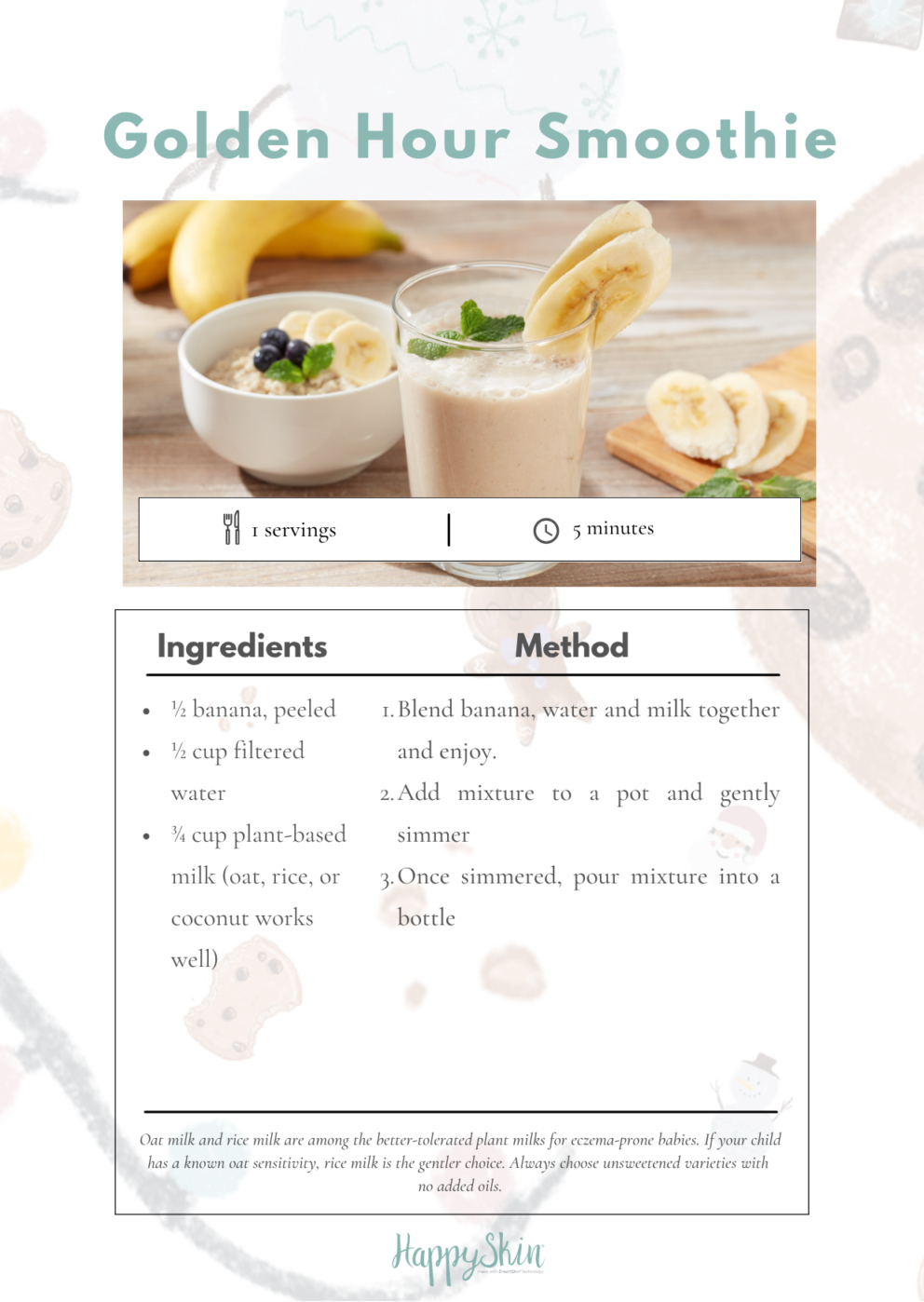
A gentle, nourishing start to Easter morning. Banana is naturally sweet and easy on sensitive tummies, while plant-based milk keeps this completely dairy-free. Warm it gently and it doubles as a soothing bedtime drink too.
Ingredients
Method
Skin-friendly note: Oat milk and rice milk are among the better-tolerated plant milks for eczema-prone babies. If your child has a known oat sensitivity, rice milk is the gentler choice. Always choose unsweetened varieties with no added oils.
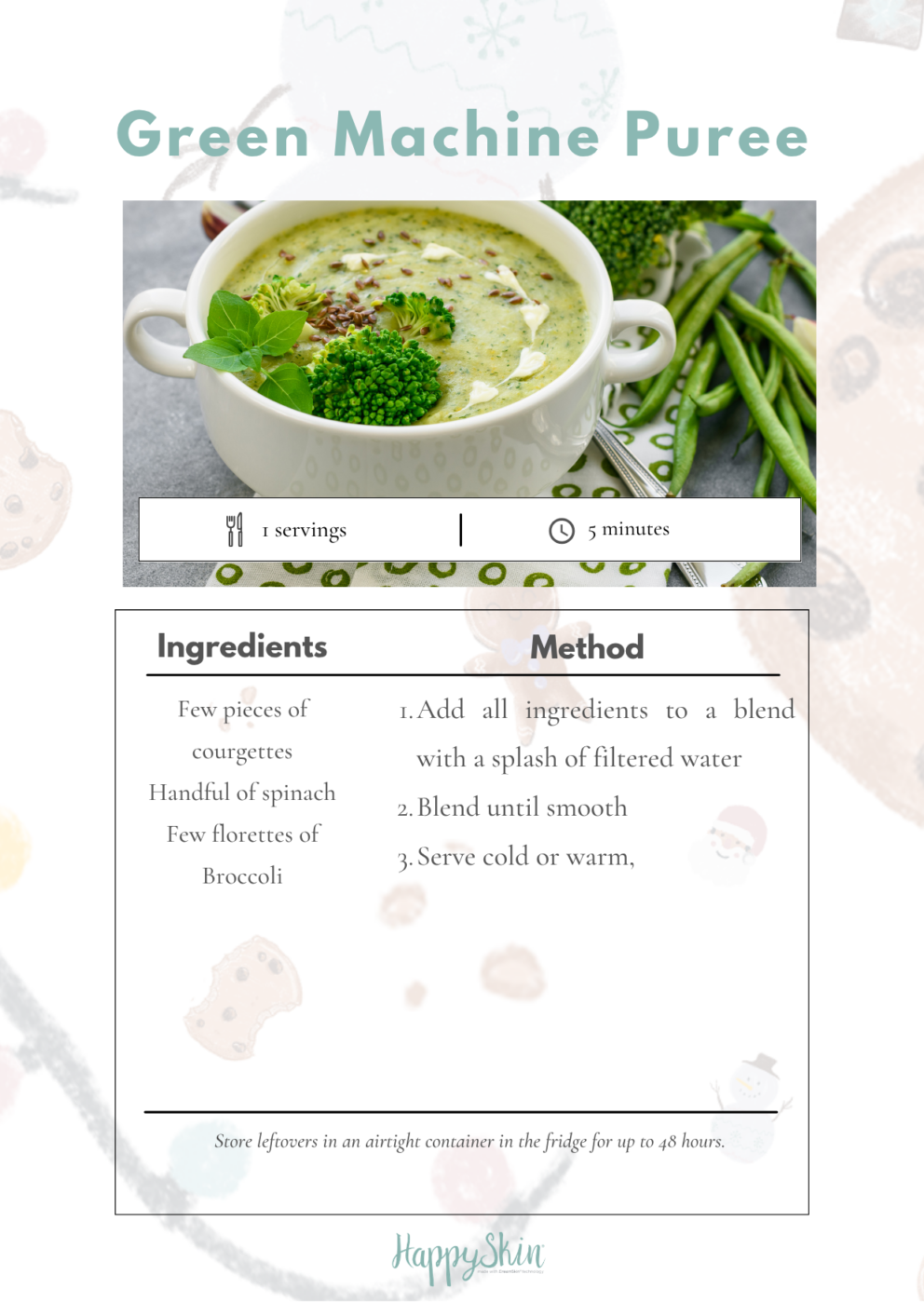
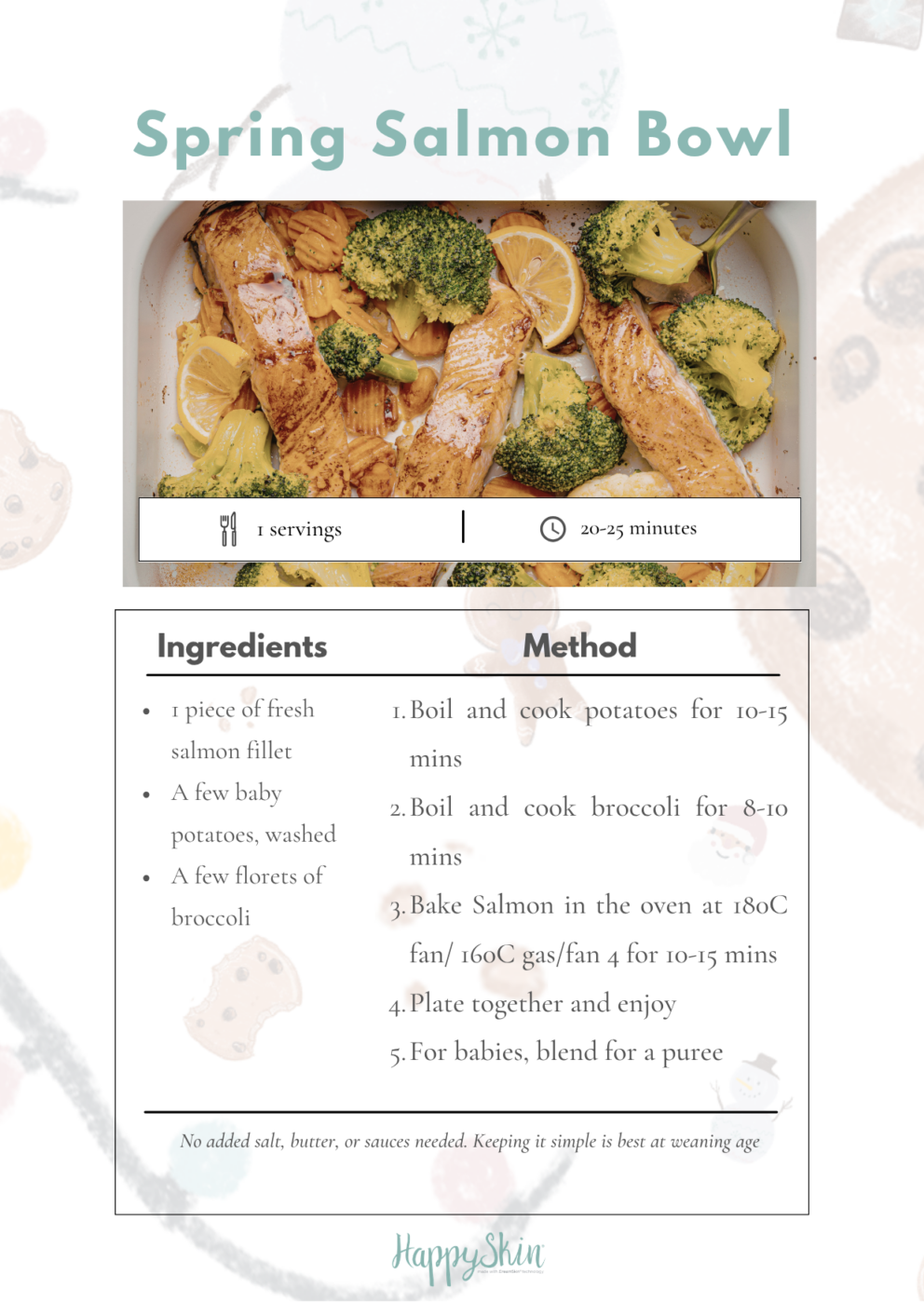
Salmon is one of the most skin-supportive foods you can offer a baby with eczema. It is a rich source of omega-3 fatty acids (EPA and DHA), which research published in Nutrients (PubMed, 2024) suggests may help reduce lesion severity, skin inflammation, and dryness in children with atopic dermatitis. A cross-sectional study in Pediatric Dermatology (PubMed, 2023) also found that higher total omega-3 intake was associated with a reduced risk of eczema in children and adolescents.
Paired with naturally anti-inflammatory broccoli and gentle baby potatoes, this is a straightforward Easter lunch the whole table can share.
Ingredients
Method
Skin-friendly note: No added salt, butter, or sauces needed. Keeping it simple is best at weaning age. Note that research on omega-3 and eczema is ongoing and results are mixed.
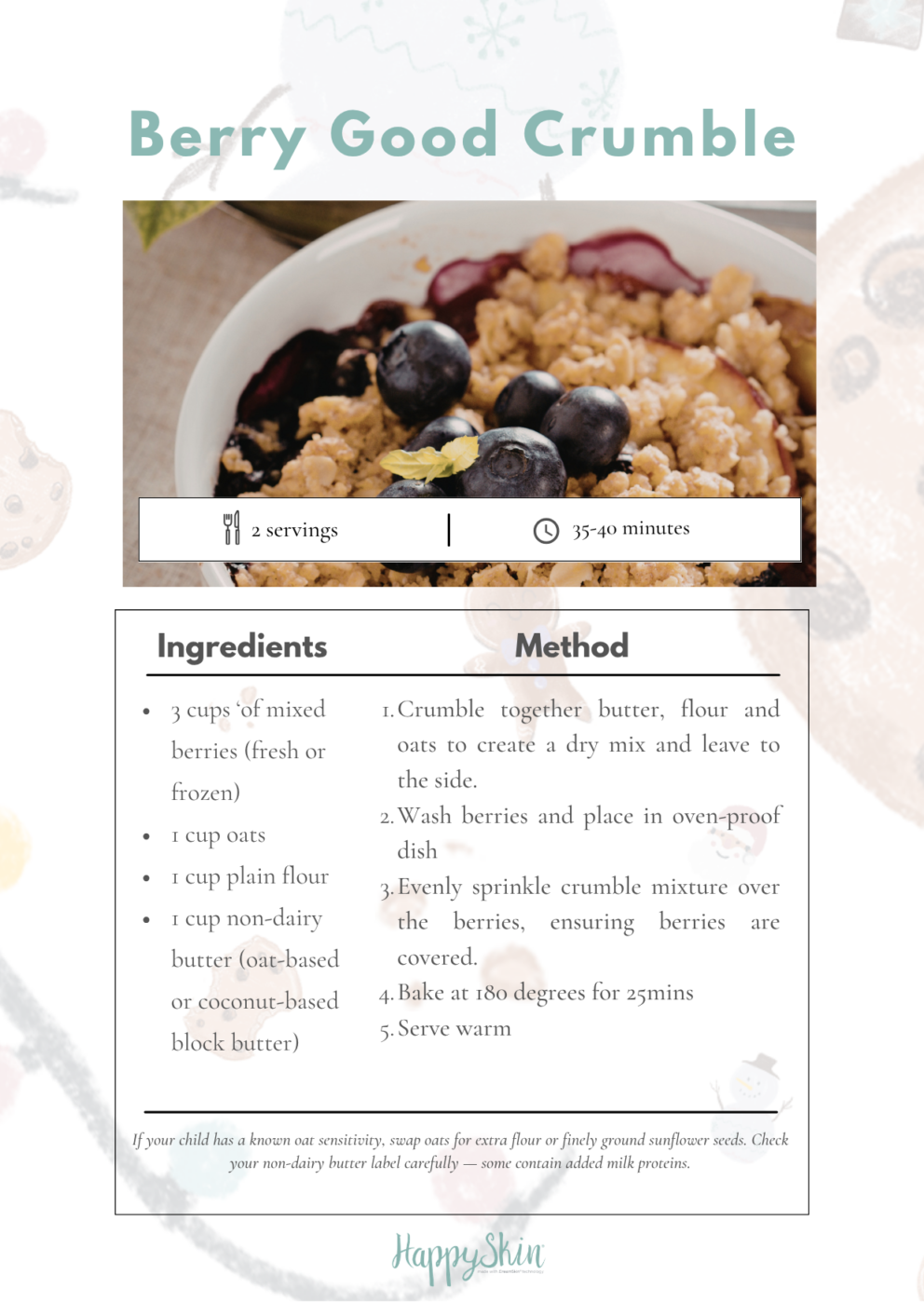
Warm, comforting, and naturally sweet from the berries. No dairy, no refined sugar, and genuinely good enough to serve to the whole table. Nobody needs to know it was made with eczema in mind.
Ingredients
Method
Skin-friendly note: If your child has a known oat sensitivity, swap oats for extra flour or finely ground sunflower seeds. Check your non-dairy butter label carefully because of some contain added milk proteins.
The food is just one part of it. Here are a few practical things worth thinking through before Easter weekend.
Even with the best planning, flares can still happen at Easter. Heat, overstimulation, and disrupted routines are all known triggers which sometimes the food is not the culprit at all.
When your little one does flare, protecting their skin from further damage during scratching is part of managing the cycle. HappySkin eczema clothing uses our patented DreamSkin technology to help support the skin’s natural moisture balance and keep clothing from trapping sweat, which is itself a common eczema trigger. It will not stop a flare, but it can help make the hours that follow more comfortable for your baby while their skin recovers.
Wishing every HappySkin family a gentle Easter!
It depends on your individual child. Egg allergy is the most common IgE-mediated food allergy in toddlers in the UK, according to the National Eczema Society. However, not every baby with eczema has an egg allergy. If your child has not yet been introduced to egg, speak to your GP or health visitor first. If your child already eats egg without any reaction, there is no need to remove it from their diet. The British Association of Dermatologists advises that recent research supports introducing common allergenic foods such as eggs early, from around four months, under medical guidance for babies with existing eczema.
Dairy-free chocolate removes cow’s milk protein, which is one of the most common eczema triggers in young children. However, always check labels for ‘may contain milk’ warnings, and bear in mind that chocolate still contains sugar and cocoa, which some children may also be sensitive to. For very young babies, fruit-based treats are a safer first option.
Not without professional guidance. The Oxford University Hospitals NHS Trust advises that there is good evidence children should not be unnecessarily restricted from common foods, and that elimination diets in young children carry a risk of nutritional problems if not properly managed. If you suspect a specific food is triggering your child’s eczema, speak to your GP, who can refer you to a pediatric dietitian.
No. Eczema is a complex condition with genetic, immunological, and environmental factors all playing a role. Food can be a trigger for flares in some children, but it is rarely the sole cause. The National Eczema Society notes that for most children with eczema, it is not caused by an underlying allergy. Managing eczema well with appropriate topical treatments and reducing known environmental triggers remains the foundation of good care.
Oat milk and rice milk are generally well tolerated by babies with dairy sensitivity. Soya formula is not recommended for infants under six months, as noted by the Royal United Hospitals Bath NHS Foundation Trust. Coconut-based drinks and almond milk are lower in protein and not nutritionally suitable as a main milk replacement for young babies. Always seek advice from your GP or health visitor before changing your baby’s main milk.
References