23 March 2025

Christmas morning. Presents under the tree. Your little one is excited, the family is gathered, and somewhere in the pile of gifts is a beautiful outfit someone picked out especially for them.
But when you have a child with eczema, getting dressed for Christmas can feel like solving a puzzle. The wrong fabric choice can turn a lovely day into an uncomfortable one, with scratching, irritation, and tears that nobody wants.
With a bit of planning and the right fabric choices, your child can be comfortable AND look festive. No compromises needed.
This guide covers which fabrics actually work for eczema skin, what to avoid, and practical outfit ideas for every Christmas occasion. We’ve also put together a free downloadable checklist you can keep on your phone or print out for quick reference.
Let’s make this Christmas comfortable for everyone.
Before we get into fabrics, it helps to understand why winter tends to be a challenging season for eczema.
Around 1 in 5 children in the UK has eczema, and many parents notice flare-ups increase during the colder months. There are a few reasons for this.
None of this means Christmas has to be difficult. It simply means making thoughtful choices about what goes against your child’s skin. Small decisions can make a big difference to their skin comfort, and yours.

When shopping for your eczema child, these fabrics are gentlest on sensitive skin.
Organic Cotton
Cotton remains the gold standard for eczema-prone skin. It’s soft, breathable, and doesn’t trap heat against the body. Unlike synthetic materials, cotton allows air to circulate, helping to regulate temperature and reduce sweating.
Another practical benefit: cotton can be washed at 60°C, which is the temperature needed to effectively remove allergens, dead skin cells, and cream residue. This matters when you’re applying emollients regularly.
Look for organic cotton where possible. Organic production doesn’t use pesticides or harsh chemicals during growing, which means less potential for residue on the finished fabric. Also check for flat seams and labels on the outside, as these small details reduce friction and irritation.
TENCEL and Lyocell
Made from wood pulp, TENCEL has naturally smooth fibres that feel gentle against skin. It’s excellent at moisture-wicking, drawing sweat away from the body rather than letting it sit against the skin. This is particularly helpful during sleep or active play when children get warm.
Silk
Silk has a smooth surface that glides over skin rather than catching or rubbing. It has natural temperature-regulating properties and some antimicrobial benefits. Medical-grade silk garments are sometimes recommended for eczema management, though silk can be more delicate to care for than cotton.
DreamSkin Technology Built-in Fabric
DreamSkin uses a polymer coating that helps regulate moisture at skin level, reducing the conditions that can trigger itching and irritation. This technology was previously available through NHS prescription, which speaks to its clinical credibility for managing eczema symptoms.
DreamSkin works particularly well as a base layer, creating a comfortable barrier between skin and outer clothing.
According to the National Eczema Society, individual reactions vary. Some children tolerate certain fabrics better than others. A base layer gives you flexibility to test what works for your child without risking a flare-up on Christmas Day.
Quick tip: If your child has a favourite Christmas outfit, do a trial run a few days before. Layer their eczema clothing underneath and see how their skin responds. Better to know now than on the 25th.
Here’s the thing: you don’t need to dress your child head-to-toe in cotton to protect their skin. A soft, eczema-friendly base layer worn underneath regular clothes creates a barrier between your child’s skin and any potentially irritating fabrics.
This means your little one can still wear that cute Christmas jumper or sparkly party dress. The base layer does the protective work, so the outer layer can be whatever you (and they) want.
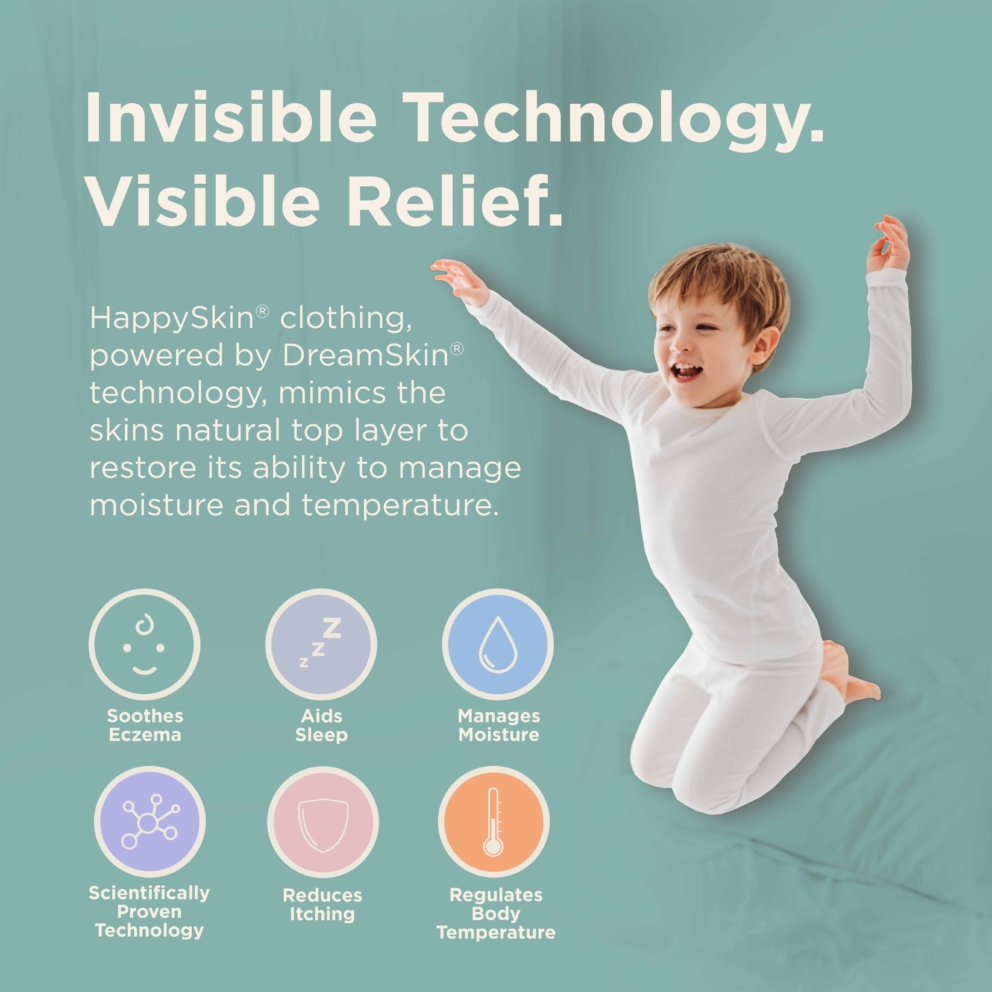
Our easily 3-steps HappySkin treatment packs is designed exactly for this. The DreamSkin® technology coating helps regulate moisture and temperature, while the flat seams and tag-free design eliminate friction points. Worn as a base layer, it protects skin all day without anyone knowing it’s there.

Some materials are more likely to trigger itching and flare-ups. Knowing what to watch for helps you plan ahead.
Warm but the fibres can feel scratchy and irritating on eczema-prone skin. This includes Christmas jumpers, cardigans, and knitted accessories like scarves and hats.
Polyester, nylon, and acrylic don’t breathe well and can trap heat and sweat against the skin. Many Christmas outfits, particularly those with sequins, glitter, or novelty prints, contain high proportions of polyester.
Knowing which fabrics work is one thing. Knowing how to put together actual outfits for real Christmas situations is another. Here’s what works for the most common scenarios.
Christmas Day at Home
The challenge: It’s a long day with lots of excitement, the heating is on, and comfort matters more than anything.
What works: Keep it simple. soft pyjamas or loungewear for the morning gift-opening session. If you’re changing for Christmas dinner, breathable eczema layers work well. There’s no need to overthink it when you’re at home with family who understand.
If grandparents are visiting and you want your little one in something more “dressed up” for a bit, consider putting a comfortable base layer underneath so you can remove the outer layer quickly if needed.
Visiting Family or Travelling
The challenge: Different environment, unfamiliar heating levels, sitting on furniture you don’t know, and being away from home comforts.
What works: Stick with familiar, tested clothing that you know works for your child. This isn’t the day to try something new. A cotton base layer acts as a barrier between skin and any outfit, giving you flexibility.
Pack a light cotton blanket or muslin for your child to sit on if you’re unsure about sofa fabrics at someone else’s house. It sounds excessive until you’ve experienced a flare-up triggered by an unfamiliar wool throw.
Always bring a change of clothes. If something goes wrong, you have options.
Christmas Parties, Church, or Events
The challenge: You want them to look lovely, but comfort still matters.
What works: Cotton dresses and shirts come in plenty of festive colours and styles. There’s no need to choose between looking good and feeling good. Red, green, cream, and gold all exist in 100% cotton.
Avoid wool cardigans, scratchy collars, and synthetic “fancy” fabrics that look nice but feel terrible. If your child wants to wear something a little less tested, put a DreamSkin or cotton base layer underneath as protection.
For girls, soft cotton tights are available as an alternative to synthetic ones. For boys, cotton shirts with soft collars work better than stiff formal options.
A quick reference for shopping, packing, or getting dressed on the day.
Before Christmas Day:
☐ Stock up on eczema-friendly base layers (long-sleeved tops + leggings)
☐ Test Christmas outfits with base layer underneath a few days ahead
☐ Pack spare base layers for overnight stays
☐ Check fabric labels on new clothes and gifts
☐ Wash new clothes before wearing (fragrance-free detergent, no fabric softener)
On the Day:
☐ Base layer goes on first, every time
☐ Remove outer layers if your child gets too warm
☐ Take breaks from scratchy costumes or party clothes
☐ Keep moisturiser handy for quick top-ups

Christmas should be about excitement, not itching. With the right base layers and a bit of planning, your eczema child can wear the festive outfits they love, join in every activity, and wake up on Boxing Day with happy skin.
Browse our full range of eczema-friendly clothing designed to be worn as protective base layers under any outfit.
Have questions about which products are right for your child? Get in touch and we’ll help you find the perfect solution.
Christmas should be about excitement, not itching. With the right base layers and a bit of planning, your eczema child can wear the festive outfits they love, join in every activity, and wake up on Boxing Day with happy skin.
Browse our full range of eczema-friendly clothing designed to be worn as protective base layers under any outfit.
Have questions about which products are right for your child? Get in touch and we’ll help you find the perfect solution.
Yes! The key is what they wear underneath, not whether they can wear festive knitwear at all. Most Christmas jumpers contain wool or acrylic, which can irritate eczema-prone skin when worn directly against it. Dress your child in a soft, long-sleeved base layer first, then put the Christmas jumper on top. The base layer creates a protective barrier so the jumper’s fibres never touch their skin. HappySkin base layers are designed to be invisible under regular clothes, so no one will know they’re wearing eczema clothing unless you tell them.
Many school uniforms contain polyester blends. If your child reacts to their uniform, a cotton or TENCEL™ base layer worn underneath can help. Some schools also allow exemptions for children with skin conditions, so it’s worth asking. For Christmas events at school, the same base layer approach works under costumes, Christmas jumpers, or party clothes.
Keep a simple diary noting what your child wore, where they went, and how their skin responded. Over time, patterns often emerge. The National Eczema Society has helpful resources on identifying triggers. If you’re struggling, speak to your GP or ask for a referral to a dermatologist.